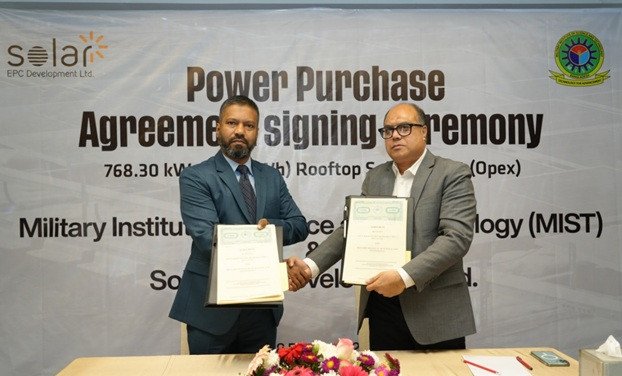


Ezaz Al Qudrat A Mazid, Founder & Managing Director of Solar EPC Development LTD.
The global energy landscape is undergoing significant disruption due to geopolitical tensions, supply chain instability, and volatility in fossil fuel markets. For Bangladesh, a rapidly growing economy that relies heavily on imported fuel, energy security has become a critical issue affecting industrial growth, export competitiveness, and long-term economic stability.
However, every crisis also creates an opportunity. From my perspective, the current energy challenges should encourage Bangladesh to accelerate its transition toward sustainable and locally generated energy solutions.
Industries such as Ready-Made Garments (RMG), export-oriented manufacturing, multinational production facilities, and agricultural processing industries form the backbone of Bangladesh’s economy. Their productivity and competitiveness depend heavily on reliable and affordable electricity.
At the same time, global supply chains are evolving rapidly. International buyers and investors are increasingly focusing on sustainability, carbon reduction, and ESG compliance. Many global brands sourcing from Bangladesh are now encouraging their partners to integrate renewable energy into their production infrastructure.
In this context, solar energy offers a strategic and scalable solution for Bangladesh. With abundant sunlight and large rooftop spaces across industrial and institutional facilities, Bangladesh has significant untapped potential to expand solar power adoption. Rooftop solar systems, captive solar plants, and grid-connected solar projects can provide industries with greater energy stability while supporting long-term sustainability goals.
For industries and institutions, solar power offers several important advantages:
- Stable and predictable energy costs in an era of volatile global fuel prices
- Improved energy security through on-site generation
- Enhanced ESG performance to meet international buyer requirements
- Long-term operational savings through reliable energy production over 20–25 years
As the Managing Director & Founder of Solar EPC Development Ltd., I strongly believe that the private sector must play a proactive role in accelerating Bangladesh’s renewable energy transformation.
Our mission is to support organizations in transitioning toward sustainable energy through integrated solar solutions—from feasibility assessments and engineering design to EPC implementation, investment structuring, and long-term system management.
We aim to work closely with RMG factories, export-oriented manufacturers, multinational corporations, agricultural processing industries, educational institutions, hospitals, and emergency service providers to develop cost-effective solar power solutions tailored to their operational needs.
For critical institutions such as hospitals, educational campuses, and emergency services, renewable energy can also strengthen operational resilience and ensure uninterrupted power during periods of energy disruption.
The current global energy crisis has highlighted the risks associated with heavy dependence on imported fossil fuels. Bangladesh now has an opportunity to strengthen its energy independence while supporting sustainable industrial growth.
By embracing solar energy at scale, Bangladesh can reduce energy costs, improve environmental performance, and position itself as a leader in sustainable manufacturing and green economic development.
The future of Bangladesh’s energy system will increasingly depend on clean, resilient, and locally generated power—and solar energy will be a central pillar of that transition.
—
Ezaz Al Qudrat A Mazid
Managing Director & Founder
Solar EPC Development Ltd.